One agency told you to invest in ecommerce SEO. Another pitched local SEO. Neither explained the actual difference, and now you’re not sure which one your online store even needs.
Here’s the clear answer — what each one actually does, and how to know which applies to your business.
Why This Confusion Costs Ecommerce Brands Real Money
Before we get into the breakdown, it’s worth naming the actual cost of not knowing the difference.
Store owners who invest in the wrong SEO type first often see months of spend with nothing to show for it — not because the work was bad, but because it was solving the wrong problem. A beautifully optimized Google Business Profile won’t move the needle if your product pages aren’t structured to convert.
Getting this right from the start saves both budget and months of wasted effort.
What Is Ecommerce SEO?
Ecommerce SEO is the practice of optimizing an online store so it ranks for buyer-intent keywords, nationally, or even globally, depending on where you ship.
It’s built around the structure of your store itself:
- Product pages optimized with unique descriptions, structured data, and clear buyer-intent keywords
- Category pages organized so Google (and shoppers) understand your catalog at a glance
- Site architecture clean enough that search engines can crawl thousands of SKUs without wasting crawl budget
- Technical health — site speed, Core Web Vitals, and mobile performance
- Structured data (schema) that feeds product info directly into Google’s shopping results and AI search summaries
The goal is simple: when someone searches for “waterproof hiking boots” or “organic face serum,” your store shows up — regardless of where that shopper happens to be sitting.
This is why ecommerce SEO services scales well for brands with national or international reach. It’s not tied to a location — it’s tied to intent, and intent exists everywhere your product does.
What Is Local SEO?
Local SEO works on a completely different axis. Instead of optimizing for buyer intent everywhere, it optimizes for geographic relevance — getting you found by people searching nearby.
That includes:
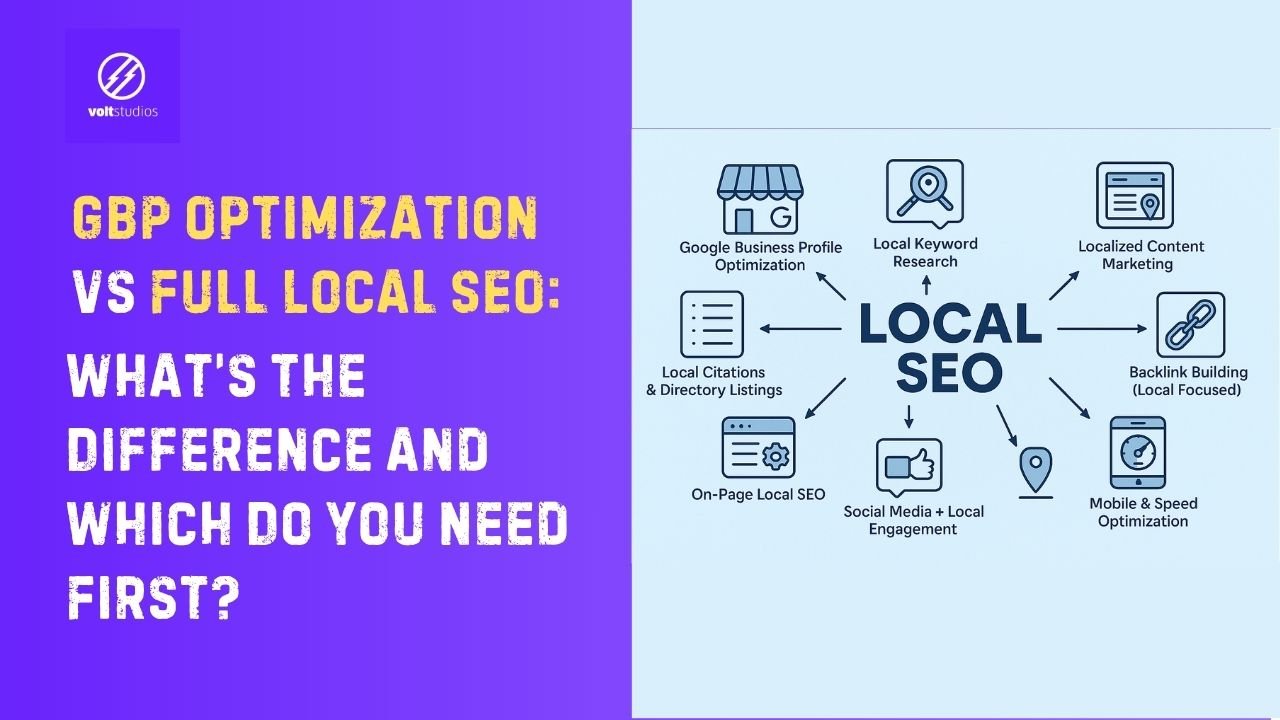
- Google Business Profile optimization, categories, photos, posts, reviews
- NAP consistency (name, address, phone) across directories and citations
- Local content built around specific cities, neighborhoods, or service areas
- “Near me” and city-specific keyword targeting
- Local backlinks and citations that signal geographic trust to Google
Local SEO wins you the Map Pack and localized organic results — the searches that carry real urgency, like “boutique jewelry store Toronto” or “same-day flower delivery Mississauga.”
These are high-intent, often same-day-conversion searches. A shopper searching “near me” isn’t casually browsing — they’re usually ready to buy or visit within hours.
Ecommerce SEO vs. Local SEO
| Subject | Ecommerce SEO | Local SEO |
| Geographic scope | National/global | City/region-specific |
| Core focus | Product & category pages, site architecture | GBP, citations, local content |
| Key tactics | Schema, technical SEO, buyer-intent keywords | NAP consistency, reviews, local backlinks |
| Best suited for | Stores shipping broadly, competitive product categories | Stores with pickup, showrooms, or regional demand |
| What it wins you | Rankings for product/category searches everywhere | Map Pack visibility, “near me” searches |
They’re not competing strategies. They’re built to win completely different kinds of searches.
Does Your Store Need Local SEO Too?
Here’s where most ecommerce brands get it wrong — assuming “we ship everywhere” means location doesn’t matter. For a growing number of stores, it still does.
You likely need local SEO layered in if:
- You offer local pickup or have a showroom. Even one physical touchpoint means Google can (and should) surface you in local searches nearby.
- Demand is concentrated in specific regions. If most orders come from the GTA or a handful of Canadian cities, local content and backlinks strengthen relevance there.
- Your product category gets “near me” searches. Furniture, home decor, specialty food, and beauty brands often see meaningful local search volume.
You likely don’t need it yet if:
- You’re a pure dropship or print-on-demand brand with no regional concentration
- Your customer base is evenly spread nationally or internationally
- You have no physical presence and no meaningful local search volume for your category
If you fall into the second group, ecommerce SEO alone is the right place to start. But for most growing Canadian stores, that’s the exception, not the rule.
Common Mistakes When Choosing Between the Two
A few mistakes come up again and again when store owners try to make this call on their own.
- Treating local SEO as all-or-nothing. You don’t need a full local SEO campaign to benefit from local search. Even a single well-optimized Google Business Profile can capture meaningful nearby demand, improve visibility in Maps, and help customers discover your business when they’re ready to buy.
- Assuming ecommerce SEO alone will fix flat local sales. Strong product pages can improve organic visibility, but they won’t always solve a city-specific sales problem. If a market underperforms despite solid ecommerce SEO, local trust signals, reviews, Google Maps visibility, and location relevance may be the missing pieces.
- Ignoring AI search visibility entirely. AI engines increasingly rely on many of the same trust, relevance, content, and entity signals that influence traditional search. Ignoring AI visibility means missing opportunities to appear when potential customers use AI tools to research businesses, services, and buying decisions.
- Assuming national reach means location never matters. A business can ship or serve customers across Canada and still have concentrated demand in specific cities. Identifying those high-value markets and strengthening local visibility there can help capture demand that broad national SEO may overlook.
Why Growing Stores Eventually Blend Both
This is the part most agencies skip: ecommerce SEO and local SEO aren’t a choice you make once and stick with forever. They’re two layers of the same growth system.
Here’s why that matters heading into 2026:
- Google increasingly blends both signals when deciding who ranks in region-specific searches.
- AI search engines compound the effect. ChatGPT, Gemini, and Perplexity pull from the same entity signals both ecommerce and local SEO help build.
- Entity clarity matters more than either tactic alone. A store clearly understood as a brand, a product expert, and a real business gets pulled into more answers across both search types.
The businesses treating this as either/or are capping their own growth.
Which Should Come First? A Quick Gut Check
- New store, no physical presence, shipping nationwide? Start with ecommerce SEO.
- Established store with a showroom or pickup option? You likely need both, running in parallel.
- Strong product pages but flat regional sales? Local SEO is the missing layer.
- Getting outranked locally by smaller competitors? That’s a local trust gap, not a product page problem.
There’s no universal answer, only the right order for your specific business.
Not sure which layer your store needs first? Get a free Growth Strategy Audit and find out exactly where your ecommerce and local SEO stand today no guesswork required.
Conclusion
Ecommerce SEO and Local SEO solve different visibility challenges, but growing stores often benefit from both. The right approach depends on your products, customers, locations, and growth goals. Start with the SEO layer that matches your biggest opportunity, then add local or ecommerce optimization as your business expands.