What the shift to AI-driven local discovery actually means for businesses in Toronto, Mississauga, Vaughan, Barrie, and Scarborough — and what the data says about who survives it.
We’ve been watching local search evolve since 2012. What’s happening right now is not a gradual shift. It’s a structural rewrite of how local businesses get discovered — and it’s moving faster than most business owners realize.
AI Overviews now appear in 40.2% of all local search queries. That’s a 58% surge since February 2025. The Map Pack and organic local results that businesses built their entire digital strategies around are being displaced, compressed, and in many cases bypassed entirely by AI-generated answers that surface before a user ever scrolls to traditional results.
The businesses that understand what’s changed are capturing market share. The ones still optimizing for 2023 assumptions are losing visibility and attributing it to the wrong causes.
What the New Landscape Actually Looks Like
When users ask Chat GPT for local business recommendations, only 1.2% of locations receive a mention. Perplexity surfaces 7.4%. Gemini reaches 11%. These numbers describe the brutal new reality: the vast majority of local businesses are completely invisible inside AI-generated responses, regardless of how well-optimized their Google Business Profile is.
The Map Pack still matters — 42% of local searchers still click Map Pack results, and the traffic quality remains high because those users are further along in their decision-making.
But 84% of local searches happen on mobile, and mobile users are increasingly encountering AI-generated summaries before they ever reach the familiar three-pack interface. The search experience is being compressed. Traditional pathways to local business discovery are being rerouted through AI curation.
The effect is not that competitors are ranking above you. It’s that AI is narrowing the field before a potential customer ever sees your name. Traditional local pack visibility has become three to thirty times harder to achieve than before AI Overviews entered the picture.
The Selection Problem
AI-driven search tools are ruthlessly selective. The top 20% of businesses capture approximately 68% of all AI-generated local visibility. The rest are filtered out — not ranked lower, filtered out entirely. AI doesn’t present a list and let users decide. It narrows the field first.
The review rating threshold is where most businesses are failing this filter. If your Google rating sits below 4.1 stars, you’re operating beneath the level most AI systems require before recommending a business.
The critical window for AI recommendations falls between 4.1 and 4.3 stars. A Scarborough contractor with 3.8 stars isn’t competing for second place in AI-generated results — they’re not competing at all.
This makes review generation more urgent than it’s ever been — not as a reputation metric, but as a prerequisite for AI visibility. A business that can’t clear the rating threshold doesn’t get considered regardless of every other signal.
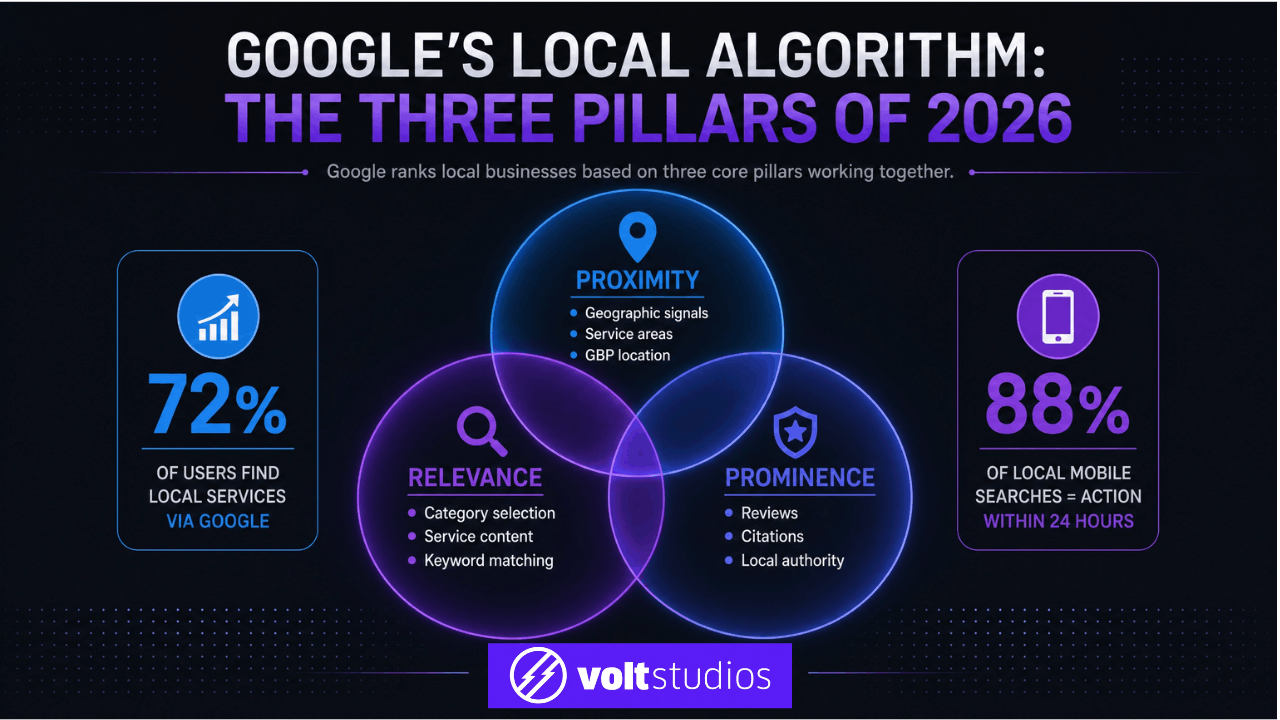
The mobile performance dimension compounds the problem. 88% of mobile local searches result in store visits or phone calls within 24 hours. 34% of websites still fail Core Web Vitals.
The highest-intent customers in the digital ecosystem are searching on their phones right now, often physically near your location — and if your site loads slowly or fails page experience standards, you’re invisible to them in real time.
What Adapting Actually Requires
The businesses pulling ahead in AI-powered local search are doing four things the others aren’t. They’re optimizing for AI review summaries. Google’s AI systems now pull sentiment and recurring themes from reviews to generate summarized snippets that appear directly in search results.
The language customers use in their feedback shapes how the business is presented before anyone clicks the listing. A review that says “great pizza” does far less work than one that says “best wood-fired pizza in downtown Toronto — fast service and perfect for family dinners.”
Encouraging detailed, specific reviews and responding to every one of them consistently reinforces the keywords and sentiment AI summaries draw from. Review response has moved from good practice to operational necessity.
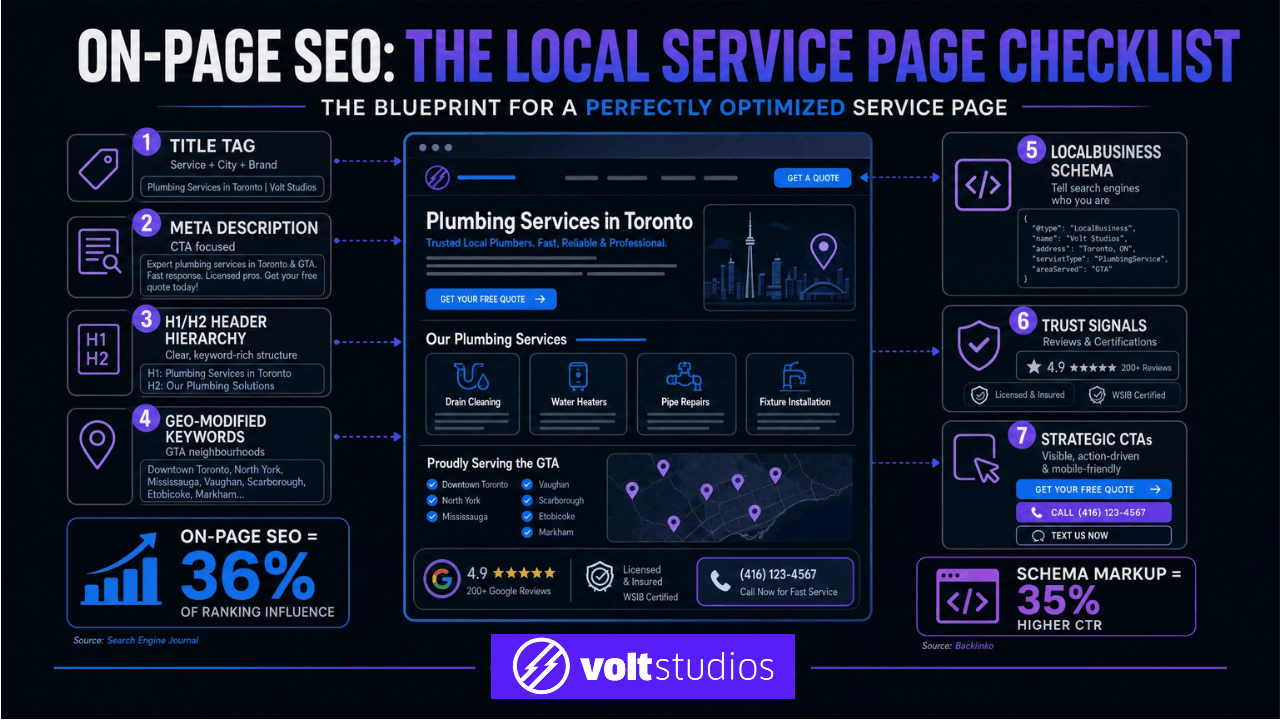
They’re building AI-readable content architecture. Local Business schema — structured data that tells search engines exactly who you are, where you operate, what you offer, and how customers reach you — feeds directly into AI-driven search features including rich results and voice search responses.
Beyond schema, AI systems are trained to recognize entities and the relationships between them. Content that explicitly connects a business to its service areas, industry categories, and the specific problems it solves gives AI systems the clarity they need to surface it for relevant queries. Ambiguous content gets ignored.
They’re maintaining Google Business Profile as a primary growth asset, not a directory listing. Profiles with videos receive 41% more clicks than those without.
Regular posts with local keywords, complete attribute fields, active Q&A management, high-quality photos and video — all of this contributes to the signals AI systems use to evaluate and surface local businesses.
Explicitly listing service areas in the GBP expands visibility radius in AI-curated results for businesses operating across multiple municipalities. They’re using AI tools strategically, not casually.
68% of high-performing local businesses actively use AI to sharpen their marketing and search strategies, compared to 52% of smaller operations. The gap isn’t in whether they use AI — 98% of small businesses use AI tools in some capacity.
The gap is in how systematically it’s applied: competitive analysis, content optimization, keyword research, performance tracking as an integrated system rather than isolated tasks.
The Compounding Advantage Being Built Now
Voice search has surged 35% year-over-year. GTA consumers are asking Siri, Alexa, and Google Assistant to find “the best [service] near me” at a rate that keeps growing.
Businesses optimized for conversational queries and natural language are capturing this traffic. Those that aren’t are losing ground quietly, without a visible signal that it’s happening.
82% of businesses using AI-powered local SEO strategies have grown their headcount. This isn’t digital marketing theory — it produces measurable economic results.
The businesses investing in AI readiness right now are building a compounding advantage. The gap between them and businesses still optimizing for 2023 assumptions is widening every month.
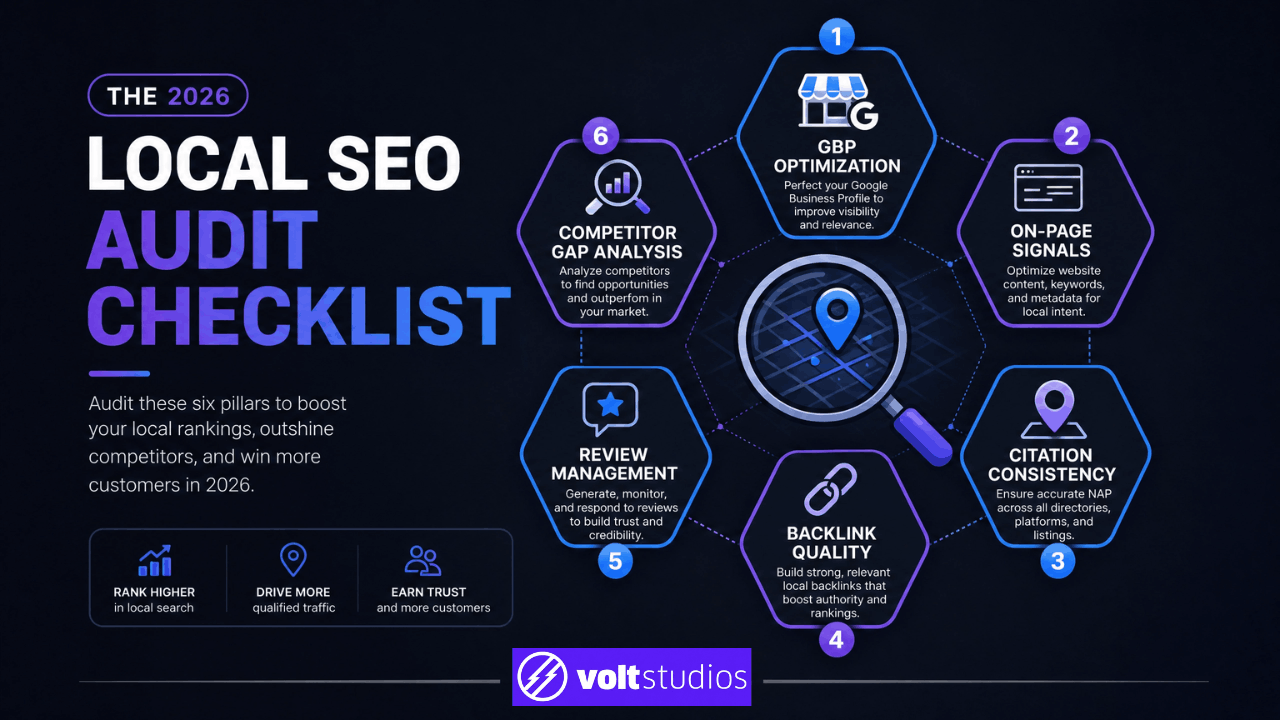
The old playbook — rank in the Local Pack, collect reviews, maintain a GBP — remains necessary. It’s no longer sufficient. The new requirement is AI readiness: structured content that AI systems can parse, review profiles that clear the quality threshold AI uses as a filter, technical performance that doesn’t eliminate you from mobile results before you’ve had a chance to compete, and GBP optimization that feeds the entity signals AI-driven discovery relies on.
If you want to know where your business stands against these requirements — which signals are missing, which technical gaps are making you invisible in AI-generated results, and what the priority order for closing them is — we offer a free local SEO and AI readiness audit for GTA businesses.
Book your free local SEO audit →