A practical framework for identifying the gaps that are quietly costing you local search visibility — and the order in which to fix them.
46% of all Google searches carry local intent. The majority of small businesses across the GTA have never conducted a structured local SEO audit. Those two facts, sitting next to each other, describe a significant and entirely correctable revenue problem.
A local SEO audit isn’t a technical exercise for its own sake. It’s a systematic answer to a question every business owner with a local customer base should be able to answer: why are competitors ranking above me, and what specifically needs to change? The businesses that can answer that question clearly are the ones pulling ahead. The ones that can’t are making investment decisions — and spending decisions — based on guesswork.
Prefer to have it done for you? Get a free local SEO audit and we’ll deliver the checklist results in a report.
What a Local SEO Audit Actually Examines
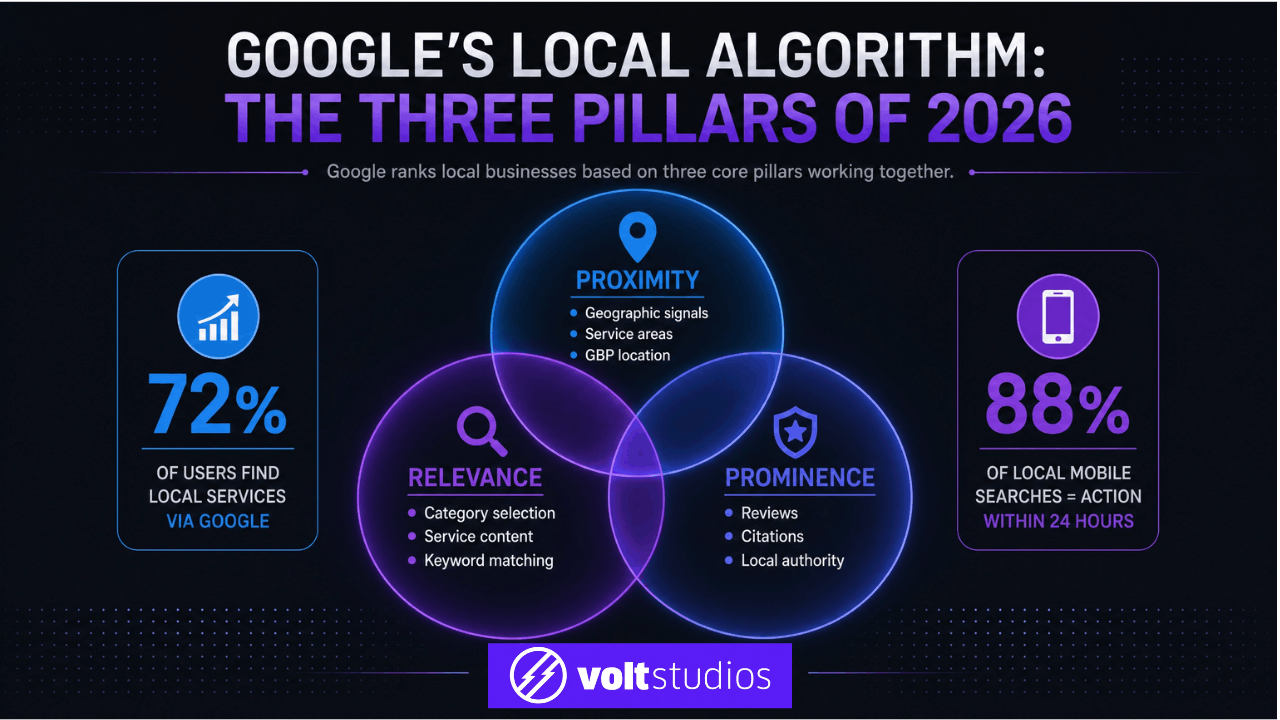
A local audit is not the same as a general website SEO audit. It examines the entire ecosystem of signals Google uses to determine which businesses appear in the Local Pack, on Maps, and in location-specific organic results — six interconnected pillars that need to be evaluated together, not in isolation.
The Google Business Profile is the most influential single asset in local search, and it’s the most commonly neglected. An unclaimed profile is an open invitation for Google to deprioritize the business or for competitors to influence the narrative.
Even among businesses that have claimed their profiles, the gaps are consistent: missing business descriptions, outdated hours, sparse photos, unresponded reviews, no regular posts. Complete GBPs receive 7x more clicks and generate 2.7x more trust than incomplete listings.
The audit of this pillar alone surfaces actionable fixes for most businesses within the first hour.
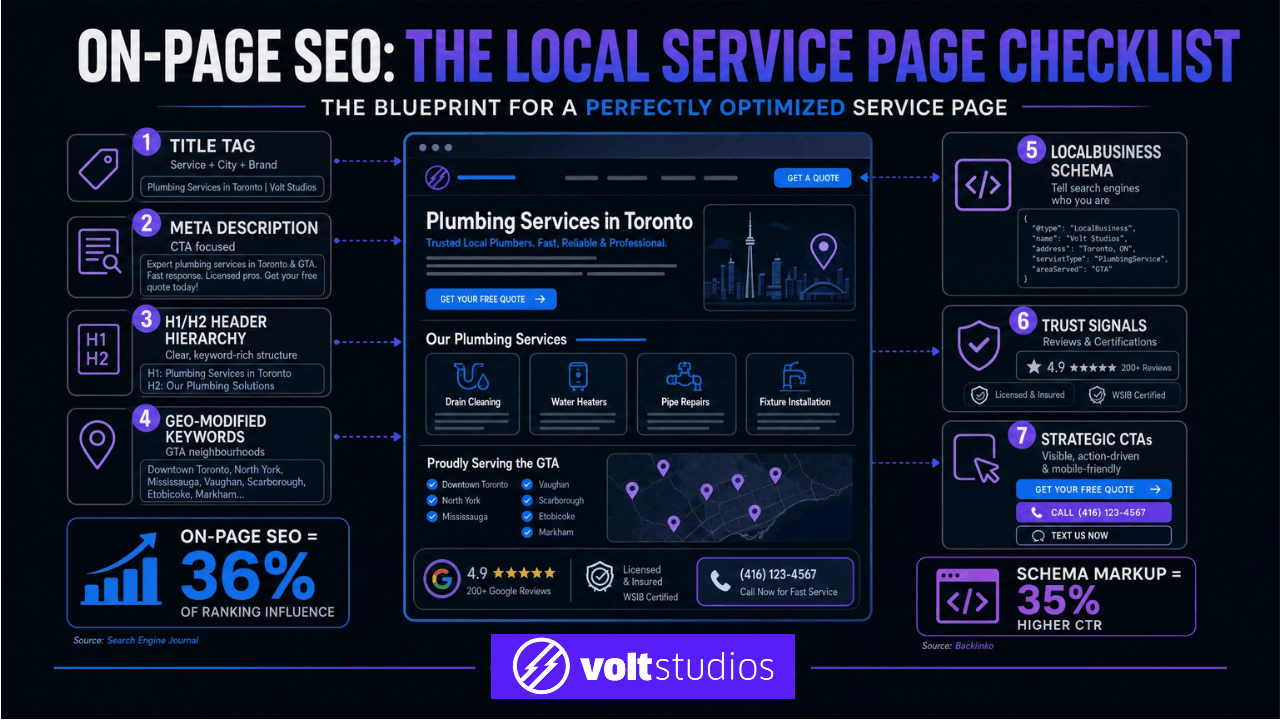
On-page local signals on the website are the second pillar. Title tags and meta descriptions that include primary local keywords, LocalBusiness schema markup on the contact page, dedicated location pages for each served area rather than a single list, internal linking that makes service and location pages accessible from the homepage, and mobile optimization that loads quickly and surfaces contact information immediately.
84% of local searches happen on mobile. A business whose contact number isn’t immediately tappable on a phone is losing calls from people who found them and then didn’t bother.
Citation consistency is the third pillar and one of the most common sources of invisible ranking suppression. Name, address, and phone number must be identical — not approximately consistent, identical — across every platform: Google, Yelp, Facebook, Yellow Pages, Bing Places, Apple Maps, industry-specific directories, local chamber listings. Subtle variations abound: “St.” versus “Street,” “Unit 5” versus “Suite 5,” business name with and without “Ltd.”
One business we’ve referenced saw a 22% visibility drop from name variations alone — and a 34% increase in impressions after correcting them. 62% of consumers actively avoid businesses with incorrect information online.
The backlink profile is the fourth pillar. Quality over quantity, local and industry relevance over raw domain metrics. Links from Toronto-area news outlets, community organizations, local business associations, and trade publications carry weight that generic directory links don’t.
The audit identifies what exists, what’s toxic and potentially harmful, and where competitors are earning links the business isn’t — sponsorships, media mentions, partnerships, community involvement.
The review profile is the fifth pillar. Average rating, total count, review velocity, response rate — across Google Business Profile, Yelp, Facebook, and any industry-specific platforms relevant to the category.
Businesses responding to at least 32% of reviews see 80% higher conversion rates than those that don’t respond. Review droughts of three or more months can cause meaningful Map Pack position drops. The audit establishes the current state and identifies both the gaps and the systematic process needed to close them.
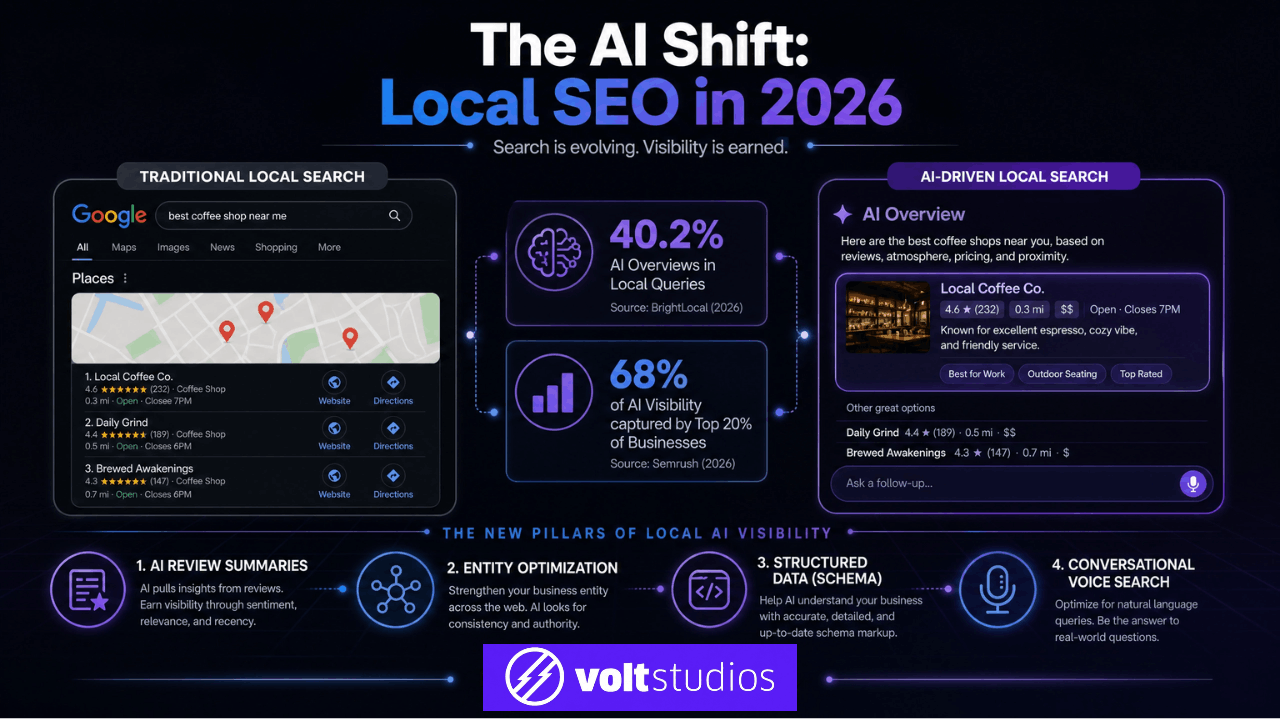
Competitor gap analysis is the sixth pillar and the one most businesses skip. The top 20% of businesses now capture 68% of local search visibility.
The audit identifies what the businesses currently ranking above you are doing that you aren’t — keyword coverage, content depth, GBP features being used, backlink sources, review velocity — not to copy them, but to identify where you can close critical gaps and where you can differentiate.
What We Consistently Find
After conducting these audits across Toronto, Mississauga, Vaughan, Barrie, and Scarborough, the findings cluster predictably.
GBP incompleteness is present on almost every audit.
Photos sparse or absent, Q&A section unmanaged, posts nonexistent or months old, holiday hours never updated, attributes left unchecked. These are the fastest fixes available and they have immediate impact on both rankings and the impression a potential customer forms before making contact.
NAP inconsistency appears on virtually every audit for businesses that have been operating for more than two years. A phone number change that got updated on the website and GBP but not on 40 directory listings.
An address that changed once and never fully propagated. A business name that evolved slightly and now appears in two or three variations across the web. Each discrepancy is small. Together they fragment the citation authority that local rankings depend on.
Review profiles that peaked and stopped. A burst of reviews collected in the first year or two, then nothing systematic — the business kept delivering good work, stopped generating visible evidence of it.
Stale review profiles are losing Map Pack positions to competitors with active velocity, regardless of overall rating or total count.
Backlink profiles that are heavy on generic directories and light on genuine local authority. No Chamber link, no local press mentions, no community sponsorships, no supplier or partner listings.
The citations exist but the authority backlinks that differentiate prominent businesses from the field are absent.
The Timeline That Sets Realistic Expectations
Quick wins — claiming the GBP if unclaimed, fixing obvious NAP inconsistencies, responding to pending reviews, completing missing profile fields — can show measurable impact within weeks. These require hours, not months.
Medium-term improvements — building a systematic citation cleanup, implementing schema markup, establishing a review generation process, creating dedicated location pages — typically yield ranking and visibility improvements within one to three months.
Long-term authority building through quality local backlinks, consistent content creation, and sustained review velocity builds compounding momentum over three to six months and beyond. This is the work that produces durable Map Pack positions rather than temporary gains.
The businesses that conduct quarterly audits with monthly check-ins on high-priority elements — reviews, GBP updates, citation health — are the ones that maintain and extend their advantage.
A single audit helps. Consistent auditing with systematic implementation is what separates market leaders from everyone competing for the positions below them.
The Compounding Cost of Skipping This
Most local SEO problems don’t announce themselves. There’s no error message when a NAP inconsistency starts suppressing rankings. There’s no notification when a three-month review drought drops a Map Pack position.
The business continues operating, traffic continues arriving, and the revenue that should be coming from local search quietly continues going to competitors who have done the work.
The audit makes the invisible visible. It converts vague awareness that “we probably should be doing more SEO” into a specific, prioritized list of fixes with predictable impact.
For businesses in competitive GTA markets where the margin between appearing in the Local Pack and not appearing is thin — and the revenue difference is significant — that clarity is not a nice-to-have. It’s the starting point for everything else.
If you want to know exactly where your local SEO stands across all six pillars — and what the highest-priority fixes are for your specific business and market — we offer a free local SEO audit for Canadian businesses.
We’ll work through each pillar, identify the gaps costing you visibility, and give you a clear action plan prioritized by impact.