Local SEO vs National SEO: The Decision Most Canadian SMBs Get Wrong
Why choosing the wrong strategy doesn’t just slow growth — it actively drains budget while competitors take the customers you should be winning.
46% of all Google searches carry local intent. That number should reshape how every business owner in Toronto, Mississauga, Vaughan, Barrie, and Scarborough thinks about their SEO investment — yet most Canadian SMBs are funding a strategy that was never built for their actual customer base.
We see this constantly. A Scarborough plumber chasing national rankings for “pipe repair services” spends months competing against Home Depot’s content team and national franchise directories.
A targeted local campaign could have had their phone ringing within weeks. The reverse is equally damaging — an e-commerce brand shipping coast to coast that invests exclusively in local SEO is leaving an enormous national audience completely untapped.
The wrong strategy doesn’t just underperform. It actively misdirects every dollar you spend on it.
Why the Confusion Is So Common
When a business owner searches for SEO help, they find agencies offering broadly worded packages — “improve your rankings,” “drive more traffic,” “dominate search results.”
What those packages rarely specify is whether the strategy is calibrated for a geographically defined customer base or a nationally dispersed one. The distinction is fundamental, and signing the wrong contract is easier than most people realize.
60% of companies under-optimize their local SEO. Most of them don’t know it. They’re not ignoring SEO — they’re pursuing the wrong version of it.
The root cause is a misunderstanding of how Google treats different query types.
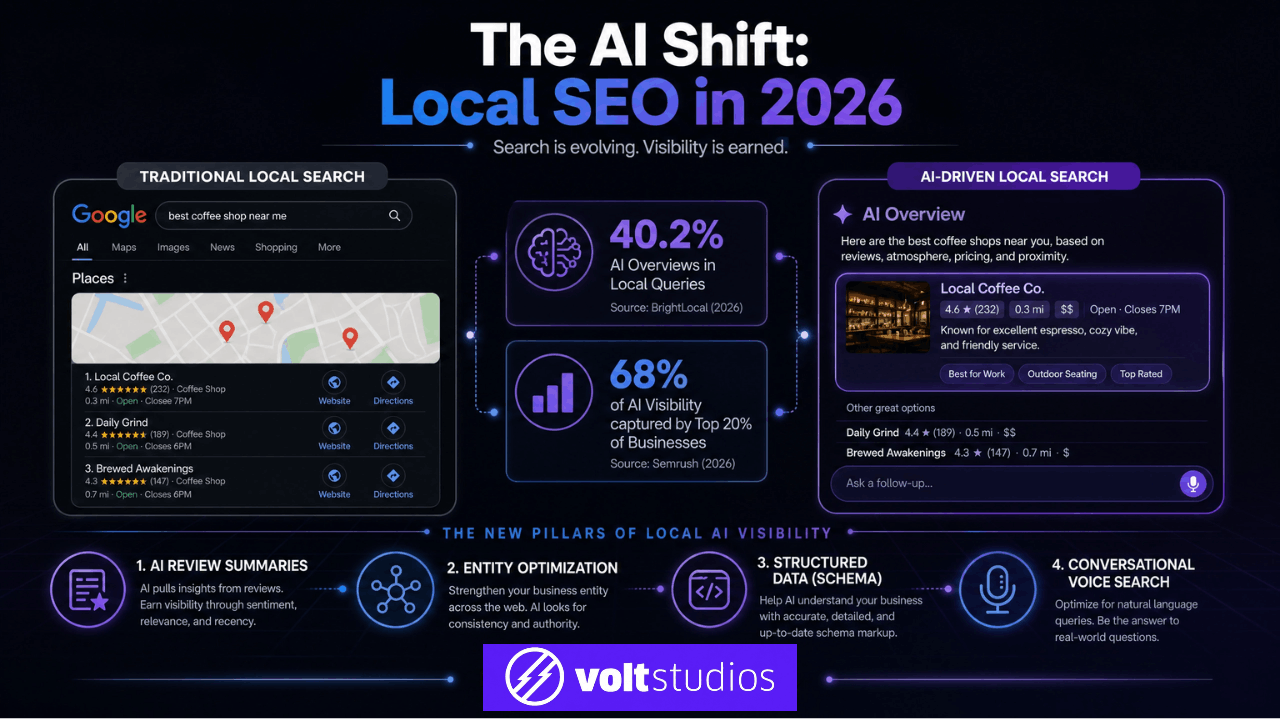
Local queries trigger an entirely separate ranking system — the Local Pack, the map-based results that appear above organic listings — while national queries rely on traditional organic ranking factors like domain authority and content depth
. These are different games with different rules. Optimizing for one while ignoring the other is not a neutral choice. It’s a structural disadvantage.
“Near me” searches grew over 900% in two years. Google has built its local search infrastructure around geographic intent. Businesses that optimize as if geography doesn’t matter are competing on the wrong playing field.
How to Know Which Strategy Your Business Actually Needs
The clearest signal is where your customers are — not where you want them to be, but where the people who actually give you money are located.
If you serve customers within a defined geographic area, operate from a physical location, or provide services at customer locations — plumbing, HVAC, landscaping, renovation, physiotherapy — local SEO is your primary lever.
Your customers are searching with geographic modifiers. They want someone they can call, visit, or book locally. The Local Pack is where that decision gets made, and the #1 position there delivers a 17.6% click-through rate — above even the top organic result.
If you ship products across Canada, operate entirely online, or serve customers who have no geographic requirement for your service, national SEO is the right foundation. You need content depth, domain authority, and backlink profiles that can compete against established national brands.
That takes 12 to 18 months of consistent investment to build properly, and starting with a local-only strategy delays that compounding by exactly as long as you wait.
If you have both a local presence and national reach — a Toronto firm that also serves clients in Vancouver and Calgary, a retailer with a physical storefront and a national e-commerce operation — a hybrid approach is the right answer, with clear prioritization based on where revenue actually comes from.
What Each Strategy Actually Requires
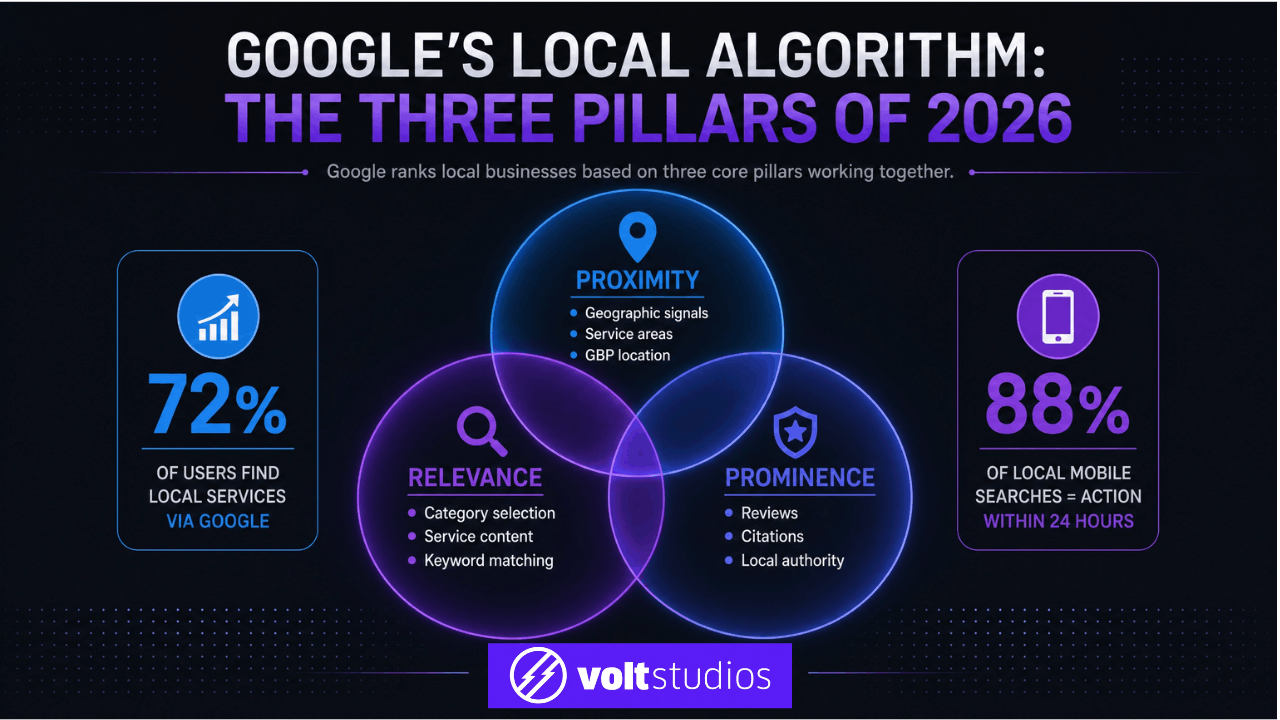
Local SEO lives and dies on three things: your Google Business Profile, your citation consistency, and your locally relevant content.
Your GBP is not a directory listing. It’s a live asset that 32% of local SEO professionals rank as the top factor for Map Pack rankings.
Weekly posts, regular photo updates, active review management, accurate service listings — businesses that set it up once and walk away consistently lose to those that keep it active. 72% of local searchers visit a business within five miles of their location. Your GBP is what convinces them to choose you.
Citation consistency matters more than citation volume. NAP discrepancies — different phone numbers, inconsistent address formats, outdated business names across directories — quietly erode trust signals
. Google notices. A dozen accurate citations on relevant local sites outperform hundreds of inconsistent directory submissions every time.
Content for local SEO should speak directly to your service area.
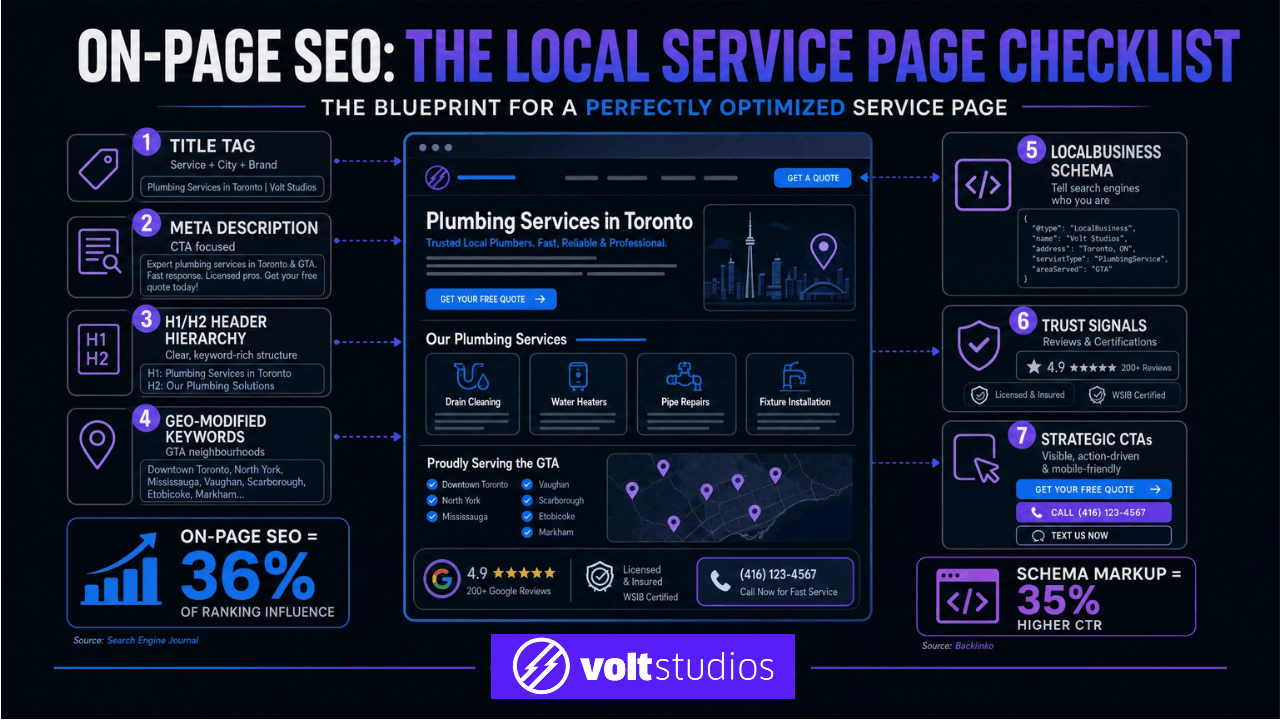
A roofing contractor in Vaughan earns rankings with “How to prepare your roof for a Vaughan winter” — not a generic article on roofing maintenance that competes with national publishers.
Local case studies, neighbourhood-specific service pages, FAQ content answering questions your actual service area searches — these are the pages that earn local visibility.
National SEO requires a different investment entirely. Domain authority compounds slowly.
A new e-commerce site typically needs 12 to 18 months of consistent content publication, strategic link acquisition, and technical SEO excellence before competing effectively for high-value national keywords.
The content has to be authoritative — comprehensive guides, original research, comparison content that signals to Google you’re the definitive resource on a topic, not one of dozens of similar sites covering it superficially.
Two Projects That Illustrate the Difference
A Barrie home services company came to us after 18 months with an agency that had delivered minimal results. Their strategy had been targeting broad keywords — “home renovation tips,” “best flooring materials” — content that attracted traffic from across North America but almost no qualified local leads.
We pivoted to local-first: GBP optimization on a weekly schedule, location-specific service pages for Barrie and surrounding areas, citation building on Home Stars and regional directories, and a review generation system that brought their rating from 3.8 to 4.7 stars. Within six months: 340% increase in GBP discovery searches, 156% increase in direction requests, 78% increase in qualified phone calls.
A Toronto specialty retailer with Canada-wide shipping had the opposite problem. They’d invested heavily in local SEO — content targeting “Toronto store” and “buy in Mississauga” — keywords with limited search volume for a business that could serve the entire country.
We shifted to national: comprehensive product guides, comparison content positioning them against major competitors, a technical SEO overhaul, and digital PR earning coverage in national lifestyle publications. Within 12 months: 420% increase in organic traffic from outside the GTA, national rankings for 47 high-value product keywords, 215% increase in online revenue.
Same discipline, completely different execution. The strategy has to match the business model.
Where Most GTA Businesses Actually Stand
The majority of small and mid-sized businesses we audit in the GTA are running some version of an unfocused strategy — not clearly local, not clearly national, not clearly hybrid.
They’re producing content without a geographic or authority-building intent behind it, leaving their GBP on a set-and-forget configuration, and building citations inconsistently while also trying to rank for broad keywords against national competition.
The businesses pulling ahead in competitive GTA markets are the ones that have made the decision clearly and committed to it. Local service businesses that treat their GBP as a primary growth asset, keep their citation data clean, and build content that speaks directly to their service area.
National and e-commerce brands that are investing in the 12+ month process of building topical authority and earning backlinks that compound over time.
Waiting to make that choice isn’t neutral. Every month without a focused strategy is a month your competitors are building the advantage you’ll eventually need to close.
If you want a clear read on which strategy fits your business — and what the highest-priority moves are right now — we offer a free local SEO audit for Canadian businesses. We’ll review your current presence, map your competitive landscape, and give you a straight answer on where to focus.
Book your free SEO strategy audit →