Imagine a potential customer standing two blocks from your Mississauga storefront, asking their phone: “Hey Google, find a plumber near me open right now.” In the next thirty seconds, they will either call your business or your competitor’s. That outcome is determined entirely by decisions you’ve already made — or haven’t made — about your local SEO strategy.
Voice search has fundamentally changed how GTA residents discover and choose local businesses, and the numbers behind that shift are no longer theoretical.
Fifty-eight percent of voice searches are specifically for local business information, and 76 percent of those searches result in a same-day visit to a physical location.
More than three-quarters of people who ask a voice assistant to find a nearby business actually show up that day. “Near me” voice queries have grown 150 percent since 2020, driven by the mass adoption of smartphones, smart speakers, and AI-powered assistants.
Today, 27 to 32 percent of mobile users conduct a voice search every single day — everyday Torontonians, Vaughan families, Barrie commuters, and Scarborough residents using voice search the way they once flipped through the Yellow Pages.
The revenue stakes make this urgent. Forty-six percent of all voice queries are local business searches, and phone calls initiated through voice search can exceed web leads in revenue value by 10 to 15 times, because a caller is almost always a buyer.
Ninety-one percent of brands are now investing heavily in voice search optimization. The question for GTA business owners is not whether voice search matters.
The question is whether your business will be found when it counts — or whether your competitor will be the answer your next customer hears.
Why Most GTA Businesses Are Invisible to Voice Search Users
Despite explosive growth in voice search adoption, the majority of small and medium businesses across Toronto, Mississauga, Vaughan, Barrie, and Scarborough remain completely invisible to voice assistant queries.
The reason is structural: traditional SEO practices and voice SEO practices are fundamentally different disciplines, and most local business websites were built for one while the market shifted to the other.
When someone types into Google, they search “Italian restaurant Toronto.” When they use voice search, they ask “What’s the best Italian restaurant near me that’s open right now?” The distinction is not just stylistic — it has profound consequences for how your site needs to be structured.
Voice assistants are designed to deliver a single, confident spoken answer, not a list of ten blue links. If your business is not positioned to be that single answer, it will not be mentioned at all.
This creates five interconnected vulnerabilities that keep well-run GTA businesses from capturing high-intent voice traffic. The first is continued reliance on short, typed-style keywords while ignoring the conversational language voice search actually uses.
Queries beginning with who, what, where, when, why, and how — full questions in natural spoken language — are the primary format of voice search. Businesses that don’t incorporate these conversational patterns into their content are simply not matching the intent voice assistants are trying to fulfil.
The second vulnerability is the absence of featured snippet optimization. Voice assistants don’t browse — they retrieve. In the vast majority of voice responses, the information read aloud comes directly from Google’s featured snippet, the highlighted result appearing above organic listings at Position Zero. If your website doesn’t have content structured to win those positions, you are invisible to voice search by definition.
Most local business websites in the GTA are built as digital brochures — they describe services and list contact information, but they don’t directly answer the specific questions local customers are asking voice assistants. That gap is where visibility is lost.
The third is the near-universal absence of FAQ schema markup. Schema is structured data code that signals to Google exactly what type of content a page contains.
FAQ schema explicitly formats question-and-answer pairs in a way voice assistants can extract and read aloud with confidence. Without it, even well-written content is harder for Google to surface as a voice response.
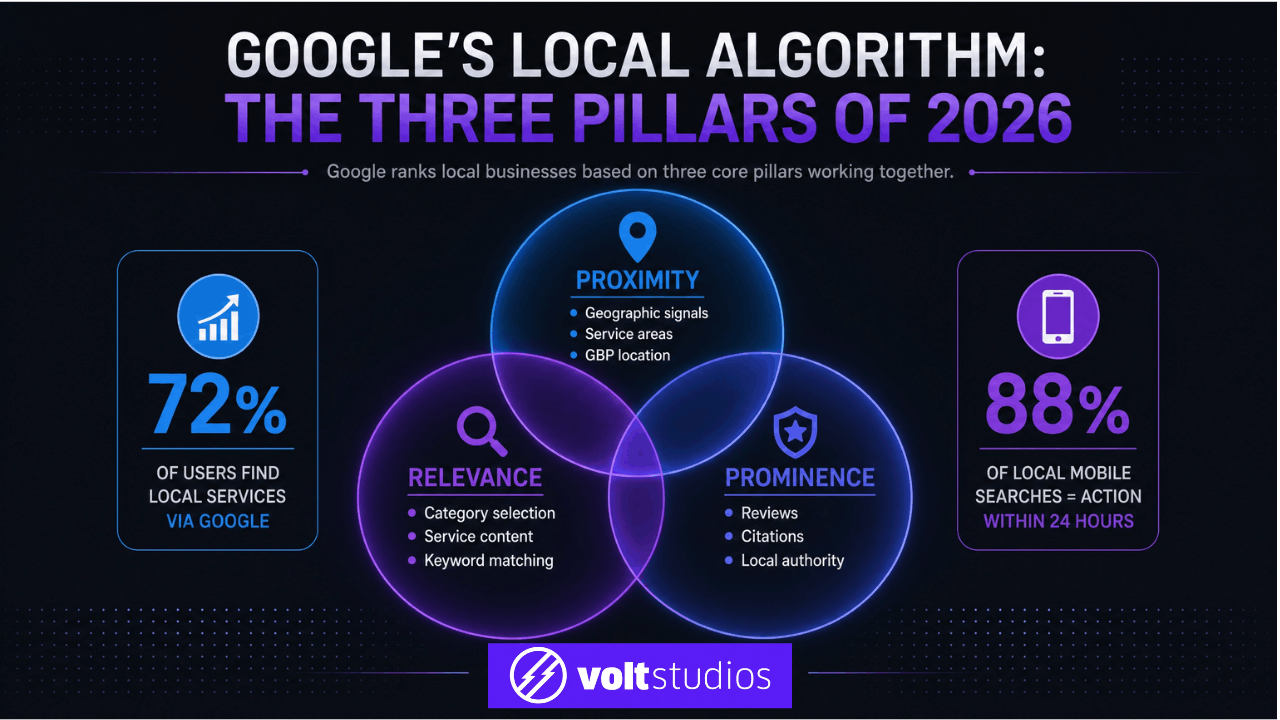
The fourth is an incomplete or neglected Google Business Profile. Missing business hours, absent category selections, no recent photos, no responses to customer reviews — each gap reduces your profile’s authority score, and that score directly determines whether a voice assistant recommends your business or your competitor’s in response to a “near me” query.
The fifth is poor mobile page speed. Voice search happens almost exclusively on mobile devices, and Google uses mobile performance as a direct ranking signal.
Page load times above three seconds result in meaningful ranking degradation, and when a voice assistant is deciding in milliseconds which business to surface, a slow-loading website is an automatic disqualifier.
These five vulnerabilities compound one another into a cumulative invisibility. And in a market where 76 percent of voice searchers visit a business the same day they search, every day that invisibility persists is revenue walking past your door to your competitor’s.
Voice queries are a layer on top of a working local SEO strategy — they don’t replace the fundamentals.
The Framework: How to Become the Answer Your Next Customer Hears
Optimizing for voice search means building a structured system that aligns your digital presence with how real customers in Toronto, Mississauga, Barrie, Vaughan, and Scarborough actually speak when they’re looking for what you offer.
Each component of that system reinforces the others, and the businesses that execute it consistently are the ones capturing the high-intent local traffic that everyone else is missing.
Conversational Keyword Targeting
The foundational shift in voice SEO is moving from keyword targeting to question targeting. For a Vaughan plumber, this means building content around “who is the best emergency plumber in Vaughan” rather than simply “Vaughan plumber.”
For a Barrie dental clinic, it means answering “is there a walk-in dentist open near Barrie right now” — in those exact words, or close to them — somewhere on the site.
Tools like AnswerThePublic and Google’s People Also Ask section surface the questions real customers are asking in your market, and those questions become the architecture of your content strategy.
Hyper-local language is equally important. Voice searchers in Scarborough reference “near Scarborough Town Centre” or “close to Kennedy Station.” A Mississauga customer might ask for a business near Square One.
Your content needs to incorporate these micro-local references to signal geographic relevance to the voice assistant matching a query to a result. And across all of this, writing at a clear, direct reading level matters: voice search results are overwhelmingly drawn from content that is conversational and immediately intelligible, not dense with industry terminology.
Featured Snippet Optimization
Earning the featured snippet position — Position Zero — is arguably the single highest-leverage activity in voice SEO. Voice assistants pull spoken answers from these highlighted results in the vast majority of cases, which means winning a featured snippet is often equivalent to winning the voice search response entirely.
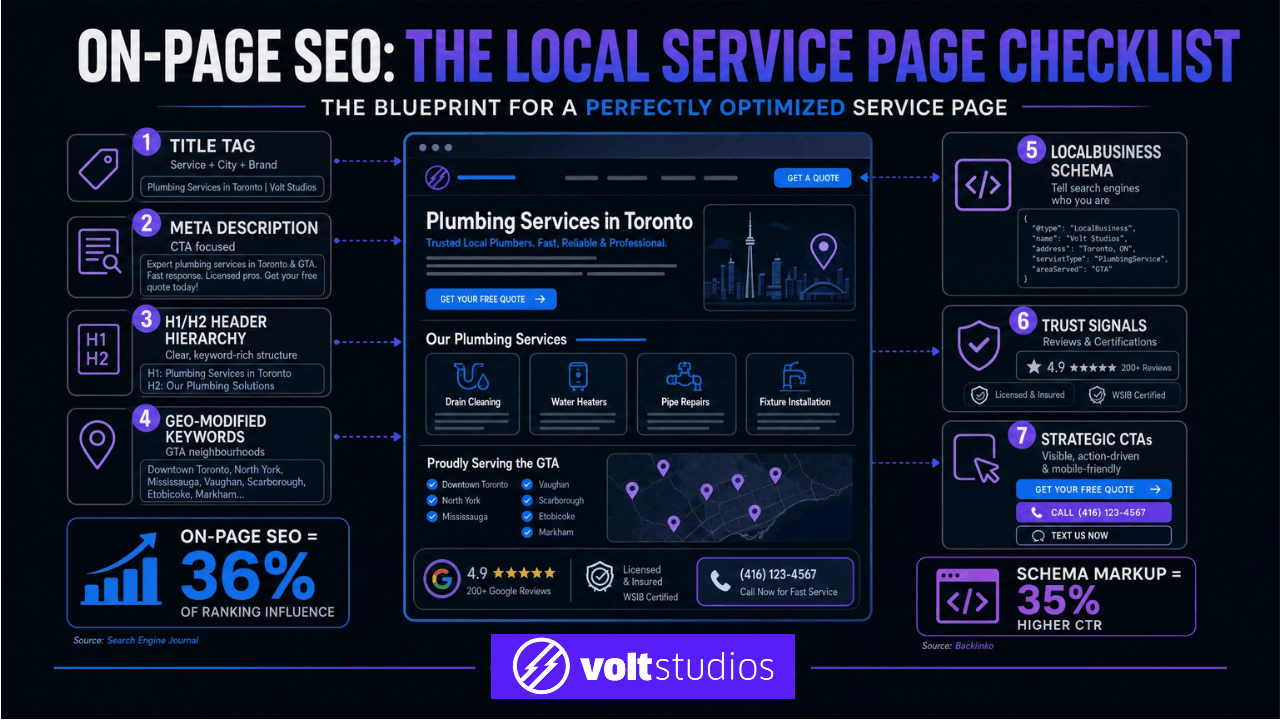
The structural approach is straightforward: answer the target question directly within the first 40 to 60 words of a section, without burying the answer after paragraphs of context.
Use question-based H2 and H3 headings — “How Much Does Roof Replacement Cost in Mississauga?” — to signal exactly what question a section is answering.
Write content that is easy to extract and read aloud, because that extractability is precisely what Google is evaluating when it selects a featured snippet.
Businesses that consistently earn these positions report two to three times higher click-through rates on mobile devices, and the voice search advantage compounds on top of that.
FAQ Schema Markup
FAQ schema is one of the most underutilized technical tools among Ontario small businesses, which makes it one of the most available competitive advantages for those who implement it now.
Adding FAQ schema to service pages and blog posts that contain question-and-answer content explicitly tells Google’s algorithm that your page is formatted to answer spoken questions — the exact signal voice assistants look for when formulating a response.
The practical requirements are straightforward. FAQ questions should match real voice queries — Google Search Console will show you which questions are already driving impressions to your site, and those become the starting point.
Answers should be concise, between 30 and 100 words, because voice assistants favour brief and authoritative over comprehensive and lengthy. In the GTA, FAQ content should also be updated seasonally: search behaviour shifts around tax season, winter weather events, and municipal changes, and current content consistently outranks stale content in local voice rankings.
Google Business Profile: The Foundation Everything Else Depends On
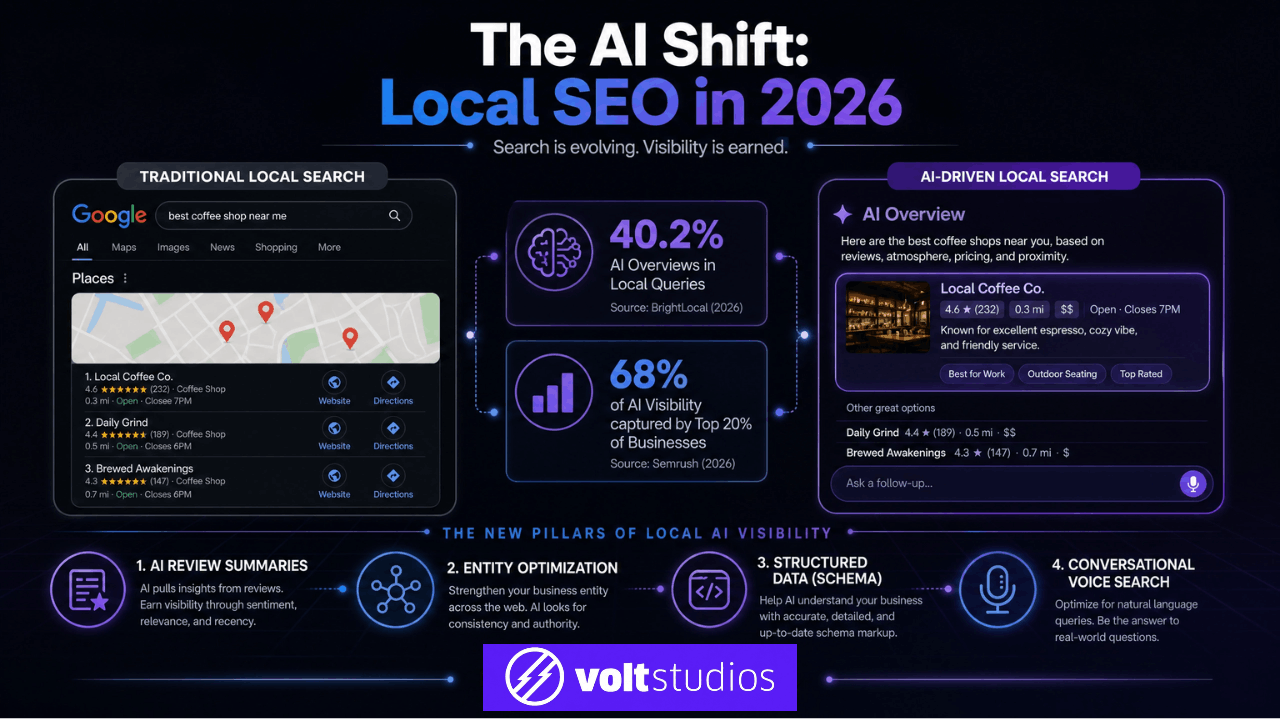
For local “near me” queries, your Google Business Profile is the single most important ranking factor in voice search. A complete, actively managed GBP profile — with every field populated, a business description written in natural conversational language, current photos, weekly posts, and a consistent review response practice — is the baseline from which all other voice SEO work compounds.
The review dimension deserves particular emphasis. A Vaughan dental clinic with 200 recent five-star reviews will outperform a competitor with 30 reviews from three years ago, even if the latter has a technically stronger website.
Voice assistants weight recency and volume of social proof heavily when selecting which business to recommend. And NAP consistency — identical Name, Address, and Phone number across your GBP, your website, every directory listing and citation — is a non-negotiable prerequisite.
Even minor variations in formatting suppress your voice search visibility in ways that are difficult to diagnose without a proper audit.
Mobile Page Speed
Every other element of voice SEO depends on the technical foundation beneath it, and that foundation is mobile page speed. Achieving a Largest Contentful Paint under 2.5 seconds, compressing images, enabling lazy loading, eliminating render-blocking code, and hosting on infrastructure with Canadian edge locations — these are the structural requirements for competing in voice search, not optional refinements.
A one-second improvement in mobile page speed has been shown to increase conversions by up to 27 percent. That improvement pays dividends across every channel, with voice search simply representing the most unforgiving context in which poor mobile performance is penalized.
The Window Is Open — But It’s Closing
The GTA is one of the most mobile-connected markets in Canada, and consumers in Mississauga, Scarborough, and Vaughan are already using voice search daily to find restaurants, contractors, healthcare providers, and retail businesses.
The businesses capturing those queries now are the ones that invested in voice SEO 12 to 18 months ago. The businesses that will dominate this time next year are the ones making that investment today.
Consider what systematic execution of this framework delivers in practice.
An HVAC company in Barrie that implemented GBP optimization, FAQ schema, and conversational long-tail keyword targeting across their service pages saw a 43 percent increase in inbound calls traced to local organic search within six months, and earned featured snippet positions for three high-value emergency service queries.
Those results came from a structured process, applied consistently — not from any single tactic in isolation. Ninety-one percent of brands are now investing in voice search optimization, and 72 percent of enterprise-level digital strategies include it as a formal component.
This is no longer an emerging trend reserved for large companies. It is the new baseline for competitive local marketing, and the window for early-mover advantage in your specific GTA market is still open — for now.
How Volt Studios Can Help
Since 2012, Volt Studios has helped local businesses across the GTA build digital strategies that translate directly into calls, walk-in traffic, and revenue.
Our AI-driven Growth System includes a dedicated voice search optimization framework designed specifically for the competitive dynamics of Toronto, Mississauga, Vaughan, Barrie, and Scarborough — from conversational keyword research and featured snippet targeting to GBP management, FAQ schema implementation, and mobile performance remediation.
We understand that managing this level of technical and content strategy alongside running a business is not realistic without expert support. That’s exactly what we provide: practical, ROI-focused execution from a team that knows the GTA market inside and out.
Book your free voice search optimization audit with Volt Studios today. We’ll analyze your current local SEO standing, identify your highest-value voice search opportunities, and give you a clear, prioritized action plan tailored to your specific market and service area. Your competitors are already optimizing. The question is whether your business will be the answer your next customer hears — or whether that answer will be someone else’s name.